If your knee has been severely affected by arthritis or injury, even simple activities such as walking or climbing stairs can become difficult. In some cases, pain may persist even while sitting or lying down. When nonsurgical treatments like medications, physiotherapy, or walking supports are no longer effective, total knee replacement surgery may be a suitable option.
Understanding the Knee Joint
The knee is the body’s largest joint and plays a crucial role in daily movement. It is formed by:
Femur (thigh bone) – lower end
Tibia (shin bone) – upper end
Patella (kneecap)
Joint deformities in the knee
Post-traumatic arthritis
Loss of mobility and function in the knee joint
Common Causes of Knee Damage
The most frequent cause of chronic knee pain and disability is arthritis, primarily:
Osteoarthritis – Age-related “wear and tear” where cartilage gradually wears away, causing stiffness and pain.
Rheumatoid arthritis – An autoimmune condition where inflammation damages cartilage and leads to joint stiffness.
Post-traumatic arthritis – Occurs after a serious injury such as a fracture or ligament tear, eventually wearing down cartilage.
What Is Knee Replacement Surgery?
Steps of the Procedure:
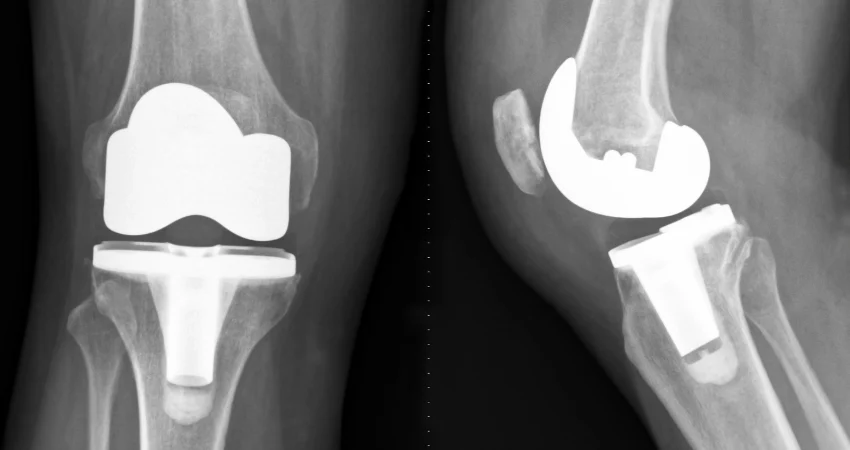
Preparing the bone – Removing damaged cartilage and a small portion of bone.
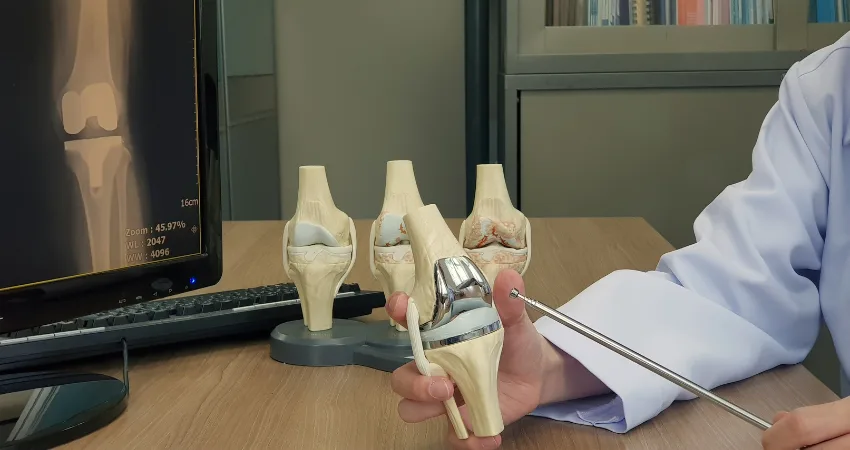
Placing metal implants – Metal components recreate the joint surface, fixed with cement or a press-fit technique.
Resurfacing the kneecap – In some cases, the patella is covered with a plastic button.
Inserting a spacer – A medical-grade plastic insert allows smooth gliding between the metal parts.
Who Should Consider Surgery?
The decision to undergo knee replacement should be made jointly between you, your family, your doctor, and your orthopaedic surgeon. You may be a candidate if you have:
Severe pain or stiffness affecting daily activities like walking or climbing stairs
Pain even while resting, day or night
Persistent swelling or inflammation unresponsive to medications or rest
Knee deformity (bowed legs or knock-knees)
Limited improvement from other treatments such as physiotherapy, injections, or minor surgeries
Candidates for Surgery
There are no strict age or weight restrictions for knee replacement. The recommendation is based on the level of pain and disability, not age. While most patients are between 50 and 80 years old, successful surgeries have been performed in younger patients with juvenile arthritis as well as in elderly individuals with advanced degenerative arthritis.