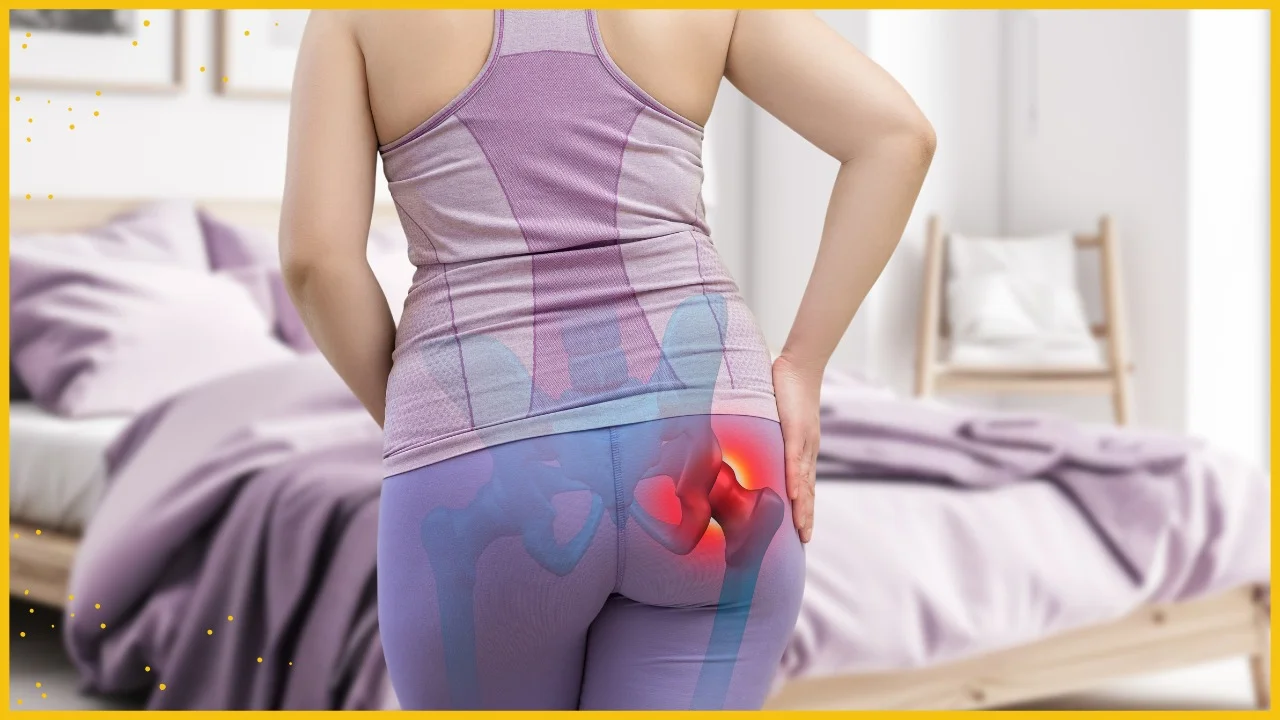
If you are exploring treatment options or have already decided on hip replacement surgery, understanding the procedure, its benefits, and its limitations is essential. This guide explains how the hip joint works, the common causes of hip pain, what to expect from surgery, and the role of rehabilitation in regaining strength and mobility.
Anatomy of the Hip
The hip is one of the body’s largest weight-bearing joints and functions as a ball-and-socket joint:
Ball – The femoral head (upper end of the thigh bone)
Socket – The acetabulum (part of the pelvis bone)
Both are covered with articular cartilage, a smooth tissue that cushions the bones and allows frictionless movement. A thin synovial membrane surrounds the joint, producing fluid that lubricates and protects it. Strong ligaments and muscles provide stability and support.
When healthy, these structures work in harmony, enabling smooth, pain-free motion. Injury or disease can disrupt this balance, causing stiffness, pain, and loss of mobility.
Common Causes of Hip Pain
The leading reason patients require hip replacement is arthritis, mainly:
Osteoarthritis – Age-related “wear and tear” where cartilage breaks down, causing bones to rub together, leading to stiffness and pain.
Rheumatoid arthritis – An autoimmune condition where chronic inflammation damages cartilage and bone, resulting in swelling, pain, and deformity.
Post-traumatic arthritis – Develops after a hip fracture or severe injury; damaged cartilage deteriorates over time, causing long-term pain and reduced function.
What Is Total Hip Replacement?
Also called hip arthroplasty, this surgical procedure replaces the damaged bone and cartilage of the hip with artificial components.
Steps of the Procedure:
Prepare the socket (acetabulum): Remove damaged cartilage and bone.
Insert the implant: A metal cup is placed in the socket, usually with a plastic or ceramic liner.
Prepare the femur: Remove the damaged femoral head and shape the thigh bone.
Insert the femoral component: A metal stem is fixed inside the femur, topped with a ceramic or metal ball that fits into the socket.
This new artificial joint allows smoother, pain-free movement and improved function.
Is Hip Replacement Right for You?
You may be advised to consider surgery if you have:
Severe hip pain that limits daily activities (walking, bending, climbing stairs)
Pain that continues even at rest, day or night
Stiffness that restricts leg movement or makes lifting difficult
Chronic inflammation or swelling unresponsive to medication or rest
Little or no relief from non-surgical treatments such as physiotherapy, injections, or walking aids
Candidates for Surgery
There are no fixed age or weight restrictions for hip replacement. The main considerations are pain severity, reduced mobility, and overall quality of life.
Most patients are between 50 and 80 years old
Successful hip replacements have been performed in both younger patients with juvenile arthritis and older patients with advanced arthritis
testimonials
our happy client
Lorem ipsum dolor sit amet, consectetur adipiscing elit, sed do eiusmod tempor incididunt ut labore et dolore magna aliqua. Ut enim ad minim veniam.
Raisa BarkerPatient
Lorem ipsum dolor sit amet, consectetur adipiscing elit, do ut labore magna aliqua.
Terrence BakerPatient
Lorem ipsum dolor sit amet, consectetur adipiscing elit, do ut labore magna aliqua.
Xiong LeePatient
Lorem ipsum dolor sit amet, consectetur adipiscing elit, do ut labore magna aliqua.