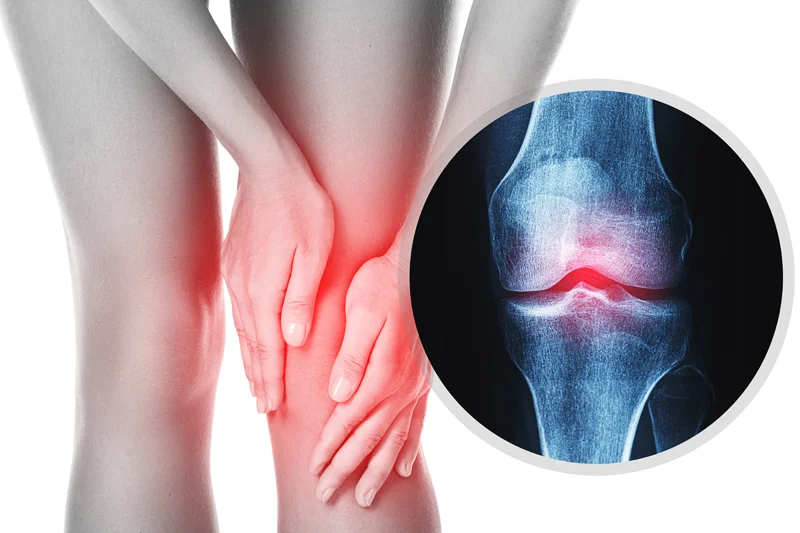
Meniscus tears are among the most common knee injuries. While athletes—especially those in contact sports—are at higher risk, meniscus tears can happen to anyone at any age. In fact, when people refer to “torn cartilage” in the knee, they are usually talking about a torn meniscus.
Anatomy of the Meniscus
Your knee joint is formed where three bones meet:
Femur (thigh bone)
Tibia (shin bone)
Patella (kneecap)
Between the femur and tibia lie two wedge-shaped pieces of fibrocartilage called the menisci. These act as shock absorbers, distributing weight across the joint and providing stability.
How Meniscus Tears Happen
A meniscus tear can occur from:
Acute trauma – sudden twisting, pivoting, or sports-related injuries (often along with ACL tears).
Degeneration over time – as we age, the meniscus tissue becomes worn and more prone to tearing, sometimes from simple activities like standing up awkwardly from a chair.
Tears are classified by their shape and location—common types include bucket-handle, flap, and radial tears.
Symptoms of a Meniscus Tear
Many patients report hearing or feeling a “pop” at the time of injury. Despite this, walking may still be possible, and some athletes can continue playing. However, within 2–3 days, swelling and stiffness usually set in.
Typical symptoms include:
Knee pain
Swelling and stiffness
Catching or locking of the knee
A sensation that the knee may “give way”
Restricted range of motion
Diagnosis
Your doctor will begin with a medical history and physical examination.
Joint line tenderness often points to a tear.
McMurray Test – bending, straightening, and rotating the knee to check for pain, clicking, or clunking.
X-rays – to rule out other causes like arthritis (though meniscus tears do not appear on X-rays).
MRI scans – provide detailed images of soft tissues, confirming the presence and extent of a tear.
Treatment Options
The right treatment depends on factors such as age, activity level, symptoms, and the type and location of the tear.
Tears in the outer one-third (red zone), which has a good blood supply, may heal on their own or be repairable with surgery.
Tears in the inner two-thirds (white zone), which lacks sufficient blood supply, usually do not heal naturally and often require surgical trimming if symptoms persist.
Rehabilitation & Recovery
Rehabilitation is essential for restoring knee strength and mobility.
Partial Meniscectomy – recovery usually takes 3 to 6 weeks.
Meniscus Repair – healing is longer, often 3 to 6 months, since the tissue must knit back together.
Rehab begins with range-of-motion exercises, followed by strengthening activities. In most cases, patients can complete rehab at home, though physiotherapy may be recommended.
testimonials
our happy client
Lorem ipsum dolor sit amet, consectetur adipiscing elit, sed do eiusmod tempor incididunt ut labore et dolore magna aliqua. Ut enim ad minim veniam.
Raisa BarkerPatient
Lorem ipsum dolor sit amet, consectetur adipiscing elit, do ut labore magna aliqua.
Terrence BakerPatient
Lorem ipsum dolor sit amet, consectetur adipiscing elit, do ut labore magna aliqua.
Xiong LeePatient
Lorem ipsum dolor sit amet, consectetur adipiscing elit, do ut labore magna aliqua.